Pure Blue Japan Denim at Mildblend: What Makes These Jeans Worth Every Penny
Among the more enduring debates within the Japanese denim community concerns the relative merits of weight versus texture. Iron Heart devotees argue for the particular satisfaction of heavyweight selvedge, the gradual softening over months of wear, the dramatic high-contrast fades that develop across a dense 21oz fabric.
Pure Blue Japan enthusiasts will tell you something different. The texture is genuine, organic, built into the yarn before the fabric is even woven and is a more interesting proposition than weight alone.
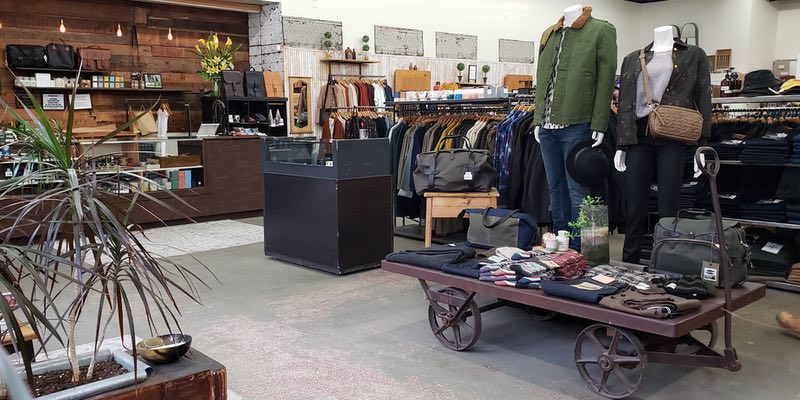
At Mildblend Supply Co in Wicker Park, Chicago, we carry both. The two brands serve different sensibilities and reward different kinds of attention.
Pure blue japan, known as PBJ, within the denim community, are among the more technically distinctive garments in the contemporary Japanese denim landscape, and understanding what places them there requires some knowledge of how they are actually made.
The Origins of Pure Blue Japan
Ken-ichi Iwaya founded Pure Blue Japan in 1997 in Kurashiki City, Okayama Prefecture , a region whose relationship with denim production extends across several decades and whose manufacturers remain among the most respected in the world. The company operates under the parent company name Syoaiya Inc., a name that, like the brand itself, was chosen to reflect a profound attachment to natural indigo and the depth of colour that it produces.
Iwaya's own introduction to denim was not a calculated commercial decision. He grew up surrounded by the industry in Okayama, where his early clients were denim factories. When he began working in clothing sales in the region at the age of twenty, he made a decision that many passionate consumers eventually arrive at: that the most direct relationship with a product is to make it yourself.
His early approach was characteristically direct. He had, by his own admission, limited knowledge of fashion production. What he did have was a clear vision of the kind of jeans he wanted to create and access to the manufacturing infrastructure of one of the world's most concentrated denim-producing regions.
The Technical Proposition: What Pure Blue Japan Actually Does
What distinguishes pure blue japan denim from most other Japanese selvedge manufacturers is not primarily the weight of the fabric or the rigour of its construction, though both are considerable. It is the approach to dyeing and weaving that sets the brand apart.
Yarn Dyeing and Rope Dyeing
Pure blue japan denim manufacturing begins with yarn dyeing. The cotton thread is dyed before weaving, rather than after. Specifically, the brand employs rope dyeing, a method in which bundles of yarn are submerged in indigo vats in a rope-like configuration, producing a dye penetration that is uneven at the core of each thread. This unevenness is not a flaw. It is the source of the complex, layered colour that characterises pbj denim and the reason the fades that develop over time have a depth and nuance that surface-dyed fabrics cannot replicate.
The indigo used is not uniform. Iwaya carefully selects yarn shapes and cotton qualities, then works with originally blended indigo in various shades. Crucially, the dyeing process is conducted with the ageing of the garment in mind. The colour as it appears when new is only the beginning of the story.
Low-Tension Weaving and Slub
The dyed yarns are woven on vintage shuttle looms from Ibara, Okayama machines that have been calibrated and maintained by factory workers, each capable of producing only a few metres of fabric per day. The weaving is conducted at low tension. This deliberate unhurriedness produces the signature slubby surface texture that is the most immediately recognisable characteristic of pbj jeans.
Slub is not simply a visual effect. It describes an irregularity in the yarn thickness that creates a tactile variation across the surface of the fabric ridges and recesses that catch light differently, that wear at different rates and that produce a fade pattern unlike anything achievable on a more uniform selvedge. The pursuit of this texture is something Iwaya has described as the result of many trials and errors, an achievement he considers central to the brand's identity.
Natural Indigo: The Aizome Pieces
Beyond the standard indigo range, Pure Blue Japan produces Aizome pieces dyed with natural Tokushima indigo, a dyeing tradition with a history of nearly 800 years. The artisans responsible for this work have been recognised as intangible cultural treasures. The indigo leaves are grown in Tokushima, dried and processed for a year before use in the Sukumo fermentation vat. The natural indigo yarns go through between twelve and sixteen rounds of dyeing before weaving.
The result is a depth of colour and a fading trajectory quite different from synthetic indigo. Natural indigo fades slowly, developing a particular quality of aged blue that is difficult to describe but immediately recognisable in person. These pieces represent the most technically ambitious end of the PBJ range and command a corresponding level of attention from serious collectors.
Stitching
One further distinguishing characteristic of pure blue japan jeans is their stitching. Where most Japanese denim brands use shorter stitching consistent with vintage American references, PBJ uses longer, thicker stitches on specially adapted sewing machines. This produces a different surface texture at the seams and a different character of wear over time, one that is distinctly their own rather than a reference to an antecedent.
The Pure Blue Japan Range at Mildblend
The XX Series
The XX series represents the core of the pbj denim range. The XX-002 is a 14oz original indigo selvedge in a relaxed piped straight cut constructed with 100% cotton, a deerskin leather patch, iron buttons and copper rivets, and finished one-washed. It is an accessible entry point into the PBJ range: substantial without being demanding, wearable across seasons, distinctive in its texture without being ostentatious.
The SLB Series
The SLB series takes the brand's slub philosophy further. The SLB-019 is a 16oz indigo slub selvedge 100% cotton, high-rise, relaxed tapered fit, woven at low tension and finished unsanforized. The unsanforized construction means the fabric has not been pre-shrunk. It will shrink on first wash and thereafter conform closely to the wearer's body.
This is not an inconvenience to be managed but a feature of a particular relationship between garment and wearer, the pure blue jeans becoming, over time, specifically yours.
Sizing for both series runs small. For the SLB in particular, Mildblend recommends sizing up at least once from a standard measurement.
Why Mildblend is Chicago's Home for Pure Blue Japan
Mildblend Supply Co was founded in Wicker Park, Chicago in 2009 by Luke Cho with a considered purpose: to present garments of genuine quality and craft within a retail environment built on knowledge rather than sales technique. The approach has not changed in the years since.
Staff at Mildblend are trained to understand the garments they carry, the manufacturing processes, the material choices, and the reasoning behind each decision a maker has taken. When a customer comes to Mildblend for pure blue japan jeans, the conversation that follows is grounded in genuine understanding of what PBJ is doing and why it matters.
The services Mildblend provides extend that relationship beyond the point of purchase. Chain-stitch hemming, personally overseen by Luke Cho, is available for pbj jeans at mildblend.com/collections/chain-stitch-hemming. Denim repair at mildblend ensures that a pair of pure blue japan denim jeans can be maintained and returned to use rather than retired.